The traditional song Dem Bones relates in a highly simplified way how each bone of the human body is connected to the other. However, it left out the temporomandibular joint (TMJ), which connects the mandible – better known as the jaw bone – to the temporal bone, located on the sides of the skull. It’s the essential little joint that makes opening and closing your mouth possible.
Most of the time, for most people, the TMJ does its important job without calling attention to itself. Yet for some people, for a variety of reasons, it causes pain or discomfort. Learning some of the basics about TMJ disorder can help you have a more productive consultation with your dentist if you’re experiencing any of the common symptoms covered in this article.
What is TMJ disorder?
According to the National Institute of Dental and Craniofacial Research (NIDCR), TMJ disorder isn’t a single condition, but a group of conditions causing pain and dysfunction in the jaw joint and muscles that control jaw movement. The TMJ Association estimates that about 12 percent of people in the United States experience this disorder.
Researchers generally agree that TMJ disorders fall into three main categories:
- Myofascial pain – Involves discomfort or pain in the muscles that control jaw function.
- Internal derangement of the joint – Involves a displaced disc, dislocated jaw or injury to the condyle (the “hinge” of the mandible).
- Arthritis – A group of degenerative/inflammatory joint disorders.
What are the symptoms of TMJ disorder?
Any level of pain or tenderness in the jaw could indicate TMJ disorder – as well as if your jaw makes a clicking sound when you open and close your mouth, even if this is not painful. Facial pain is another common symptom, as is any limitation of jaw movement, or locking of the joint, making it difficult to open or close your mouth .
According to Mayo Clinic , other signs and symptoms of TMJ disorders may include :
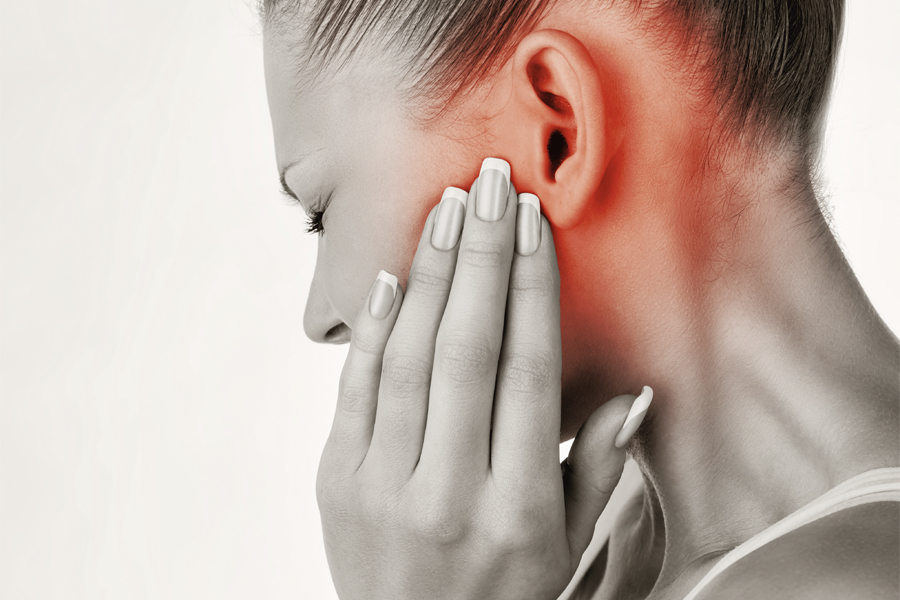
– Pain in one or both of the temporomandibular joints
– Aching pain in and around the ear
– Difficulty chewing or pain while chewing
– Aching facial pain
What are the causes of TMJ disorder?
A number of factors can contribute to a TMJ disorder, including erosion of the disc between the ball and socket. The disc cushions the load while enabling the jaw to open widely and rotate or glide. Any problem that prevents this complex system of muscles, ligaments, discs and bones from working properly may result in a painful TMJ disorder.
Other causes include:
- Arthritis
- Clenching or grinding your teeth (also known as bruxism )
- Complications of dental surgery
- Autoimmune disease
- Infection
Talking with your dentist about TMJ disorder
A diagnosis by a dentist – preferably one with extensive experience in treating TMJ disorder – is necessary before treatment can begin. This is not a condition to attempt to diagnose or treat yourself, as TMJ disorder is complex and symptoms may indicate an underlying medical condition. 24/7 Local Dentist specializes in treating TMJ disorder. Please visit our TMJ disorder page to learn how we perform our examination, and the treatment options you may be offered, depending upon your particular situation.
A typical examination to diagnose TMJ involves includes checking the joints and muscles for tenderness, clicking, popping or difficulty moving. X-rays may be taken. If necessary, more extensive diagnostic tests can include a CT scan, MRI or a TMJ arthroscopy. Depending on the diagnosis, your dentist may refer you to a physician or another dentist who specializes in TMJ disorder.
After establishing a TMJ disorder diagnosis, your dentist or doctor will provide treatment options, which could include the following:
- Exercises to strengthen your jaw muscles
- Prescription medications – for example, muscle relaxants, analgesics, anti-anxiety drugs or anti-inflammatory medications
- A night guard or bite plate to decrease clenching or grinding of teeth
- Physical therapy
- Injection treatment
Surgery may be necessary for more critical cases. Common surgical procedures to treat TMJ disorder include arthrocentesis, TMJ arthroscopy and condylotomy.