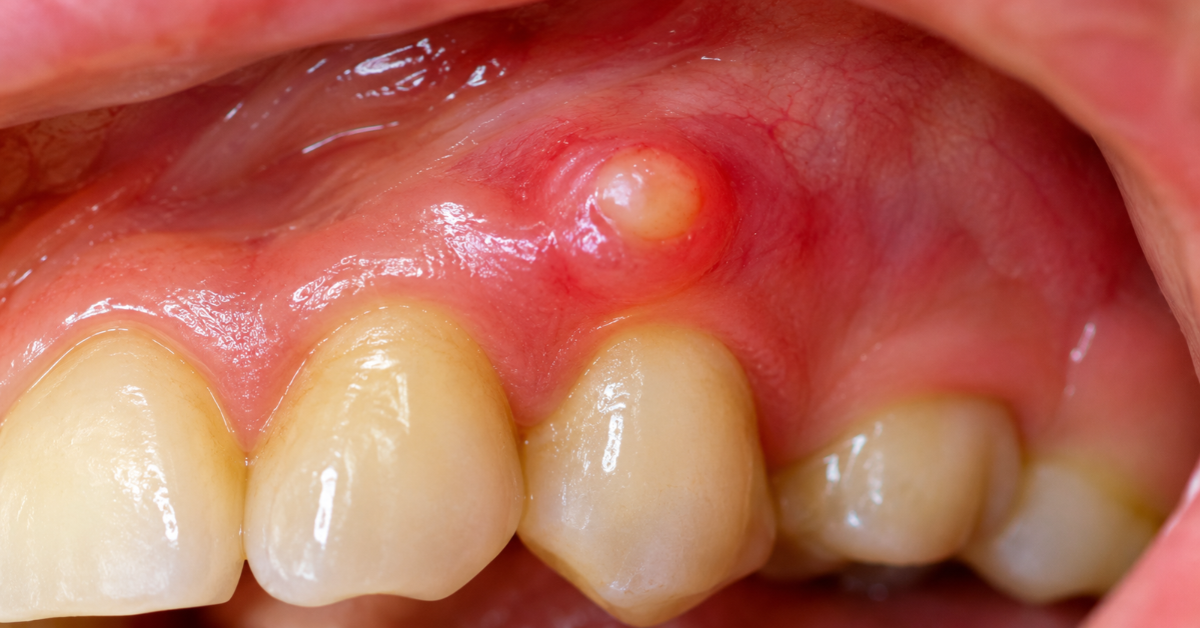
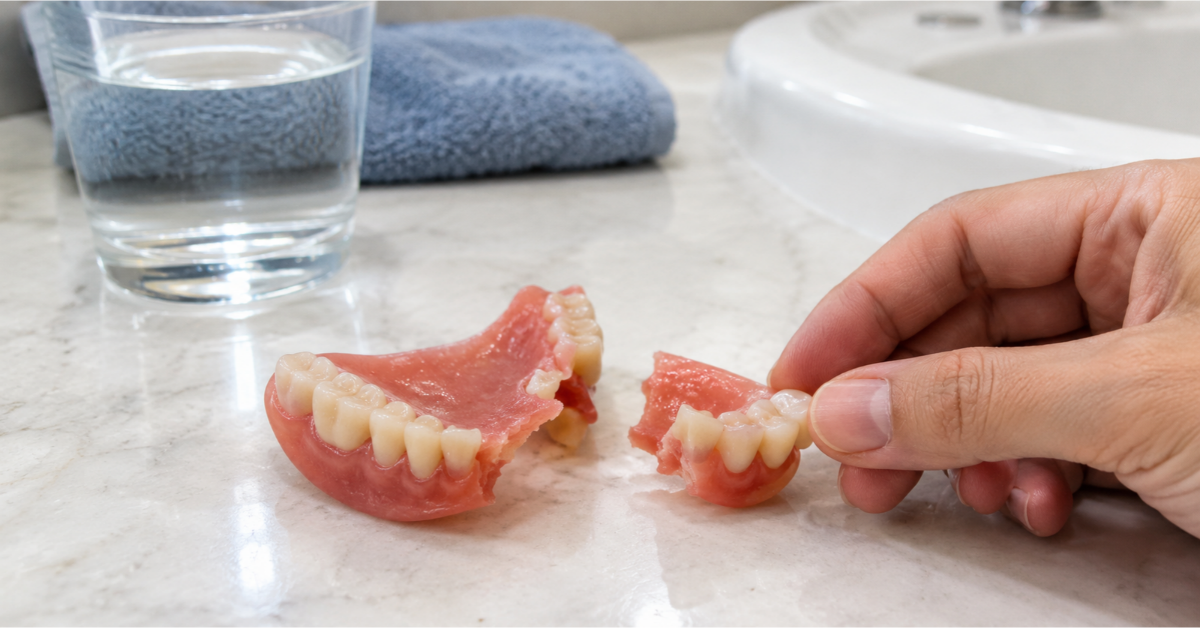
An exposed tooth nerve is one of the most painful dental problems. A puff of cold air, a sip of water, or even a light touch can set off a sharp, electric jolt that stops you in your tracks. Some people describe it as a lightning bolt shooting through the tooth. For others, it’s a deep, constant throb that makes it hard to eat, talk, or sleep.
The nerve sits inside the tooth, protected by hard layers of enamel and dentin. When a deep cavity, crack, chip, or lost filling breaks through that shield, the nerve is exposed to air, food, and bacteria. That’s why the pain feels so intense. It’s also why an exposed nerve can lead to a tooth infection if it isn’t treated.
The pain won’t fix itself, and the nerve can’t cover itself back up. So if you think a nerve is exposed, you need to act, and the first few minutes matter. Small steps can protect the tooth and ease the pain until you’re seen.
This guide covers the symptoms of an exposed tooth nerve, the common causes, and the emergency steps to take right away. You’ll also learn what an emergency dentist will do to treat it, and when it’s time to get urgent care.
What Is an Exposed Tooth Nerve?
Inside every tooth is the pulp. It holds the nerve and blood vessels. Normally, hard enamel and dentin protect it.
When that protective layer is lost, the pulp can be exposed. Bacteria and air can reach it, and that causes pain and a risk of infection.
Exposed Tooth Nerve Symptoms
Look for these signs:
- Sudden, sharp pain when you breathe in air, drink something cold, or eat sweets
- Pain when you touch the tooth or chew
- A deep hole, crack, or missing piece in the tooth
- A pink or red spot inside a broken area
- Pain that lingers after the trigger is gone
- Throbbing that gets worse at night
Common Causes of an Exposed Nerve
- Deep decay. A cavity can eat through the enamel and dentin to reach the pulp.
- A broken or cracked tooth. A fall, sports hit, or biting something hard can do this. See our page on broken or fractured teeth.
- A chipped tooth. A deep chip can open a path to the nerve. Learn more on chipped teeth.
- A lost filling. See what to do about a lost dental filling.
- Gum recession. When gums pull back, the root can be left uncovered. This is often called root exposure.
Emergency Steps: What to Do Right Now
In the first 10 minutes
- Rinse your mouth gently with warm water.
- If a piece of the tooth broke off, save it. Keep it in milk or a clean, damp cloth.
- Use a cold pack on your cheek for pain and swelling.
- Call an emergency dentist. Don't wait until morning if the pain is severe.
Tonight, while you wait
- Cover the area with temporary dental filling material from a pharmacy. Dental wax can also help.
- Take an over-the-counter pain reliever as directed on the label.
- Sleep with your head raised.
- Eat soft foods, and chew on the other side.
What to avoid
- Very hot or very cold food and drinks
- Poking the tooth with a finger, toothpick, or tool
- Sugary snacks, which can set off pain
- Putting aspirin on the tooth or gum
Is an Exposed Nerve a Dental Emergency?
Usually, yes. An exposed nerve can lead to infection, and the pain can be severe. Go to an emergency dentist the same day if you have:
- Severe or constant pain
- Swelling in your face or gums
- A fever
- A broken tooth with visible pulp
Not sure how urgent it is? Our article on whether a chipped tooth can wait until morning can help you decide. For intense pain, see our page on severe toothache.
How Dentists Treat an Exposed Nerve
The treatment depends on how much damage there is.
- Pulp capping. For a small exposure, a dentist may place a protective layer over the nerve.
- Root canal. If the nerve is badly damaged or infected, the pulp is removed and the tooth is sealed. Learn about root canals.
- Crown. A tooth with a root canal often gets a crown for strength.
- Extraction. If the tooth can't be saved, it is removed.
Exposed Tooth Nerve FAQs
Q: Can an exposed tooth nerve heal on its own?
A: No. The nerve can't cover itself again. It needs dental treatment.
Q: How long can I wait to treat an exposed nerve?
A: Not long. The risk of infection grows each day, so aim to be seen within 24 hours.
Q: Will an exposed nerve stop hurting?
A: The pain may fade if the nerve dies, but the infection can remain.
Q: What does an exposed tooth nerve look like?
A: You may see a deep hole or a small pink or red spot inside a broken tooth.
Q: What helps exposed nerve pain at night?
A: Keep your head raised, use a cold pack, and take a pain reliever as directed.
Get Help Fast
An exposed nerve won’t fix itself, and the pain rarely waits. The nerve can’t cover itself back up, so the longer it stays open to air, food, and bacteria, the greater the risk of infection. Small steps at home, like a cold pack, soft foods, and a pain reliever used as directed, can ease the discomfort. But they only buy you time.
The best next step is to see a dentist as soon as you can, ideally within 24 hours. Early treatment may mean a simple protective filling or a root canal that saves the tooth. Waiting can lead to an abscess, more pain, and a bigger procedure. If you notice facial swelling, a fever, or trouble swallowing or breathing, get urgent care right away.
Call (833) 220-2448 to talk to a live operator any time, day or night. You can also find a dentist in your state or view the full list of common dental emergencies.