There's no safe amount of time to leave a tooth abscess untreated. It's tempting to hope the pain will fade and the problem will resolve on its own, especially if the ache seems to be easing up. But an abscess is a bacterial infection, and like any infection, your body can't clear it without help. Left alone, it doesn't go away — it spreads.
Here's what's actually happening inside your tooth, how quickly things can escalate, and why "just a few more days" is riskier than it feels.
What a Tooth Abscess Actually Is
A tooth abscess starts when bacteria work their way into the dental pulp, the soft tissue inside your tooth that contains nerves, blood vessels, and connective tissue. This usually happens through untreated decay, a crack, or trauma to the tooth. Once bacteria are inside, they multiply, triggering inflammation and a buildup of pus that creates pressure, and pressure is what causes that deep, throbbing pain.
There's No Fixed Timeline — But the Risk Builds Fast
One of the most important things to understand is that there's no single, predictable timeline for how a dental infection will progress. In some cases, a tooth infection can become dangerous within just a couple of days. In others, it may take weeks or even months before serious complications show up. That unpredictability is exactly why dentists don't recommend a wait-and-see approach: you have no way of knowing in advance whether you're looking at a slow-moving infection or one that turns serious within 48 to 72 hours.
What is predictable is the direction it moves. Once bacteria are established, they follow the path of least resistance, whether that's toward the jawbone, the sinuses, the neck, or, less commonly but far more seriously, into the bloodstream.
What Happens the Longer It's Left Alone
Pain and swelling get worse, not better. As the infection expands, so does the pressure on the surrounding tissue and nerves. What starts as manageable discomfort can progress into intense, constant pain that interferes with eating, sleeping, and daily life.
Nearby bone and tissue start breaking down. The bacteria in an abscess can erode the bone and gum tissue supporting the tooth. This is one of the more serious long-term risks, since bone loss isn't easily reversible; rebuilding it later, if needed, can require a bone graft procedure.
The infection can spread to nearby structures. Depending on which tooth is affected, an untreated infection can travel to neighboring teeth, into the sinuses (especially with upper teeth, given how close they sit to the sinus cavities), or into the jawbone itself, a painful condition called osteomyelitis that may require surgical treatment.
It can affect your ability to eat, speak, or swallow. As swelling spreads into the surrounding tissue, everyday functions can become difficult or painful, which is often when people finally seek care, sometimes later than they should have.
When It Becomes a Medical Emergency, Not Just a Dental One
In rarer but serious cases, an untreated abscess can lead to complications that go beyond the mouth entirely:
- Difficulty breathing or swallowing — swelling that spreads toward the throat or under the tongue can restrict the airway
- Ludwig's angina — a severe infection under the tongue that can obstruct breathing and is considered life-threatening
- Sepsis — if bacteria enter the bloodstream, the infection can spread to organs throughout the body
- Endocarditis or other organ infections — in rare cases, bloodstream spread can affect the heart or other vital organs
These outcomes are uncommon, but they're well documented, and they're exactly why dental professionals treat an abscess with real urgency rather than as something to "keep an eye on."
Why Home Remedies Won't Fix It
Warm salt water rinses, over-the-counter pain relievers, and cold compresses can ease discomfort temporarily, but none of them address the underlying infection. An abscess requires actual treatment, whether that's drainage, a root canal to remove the infected tissue, or extraction if the tooth is too damaged to save. Until the source of the infection is addressed, the abscess will continue to progress, even if the pain temporarily eases (which can actually be a warning sign that the infection is spreading rather than resolving, since a dying nerve can mean the pain signal itself has stopped).
Signs You Shouldn't Wait Any Longer
Contact an emergency dentist right away if you notice:
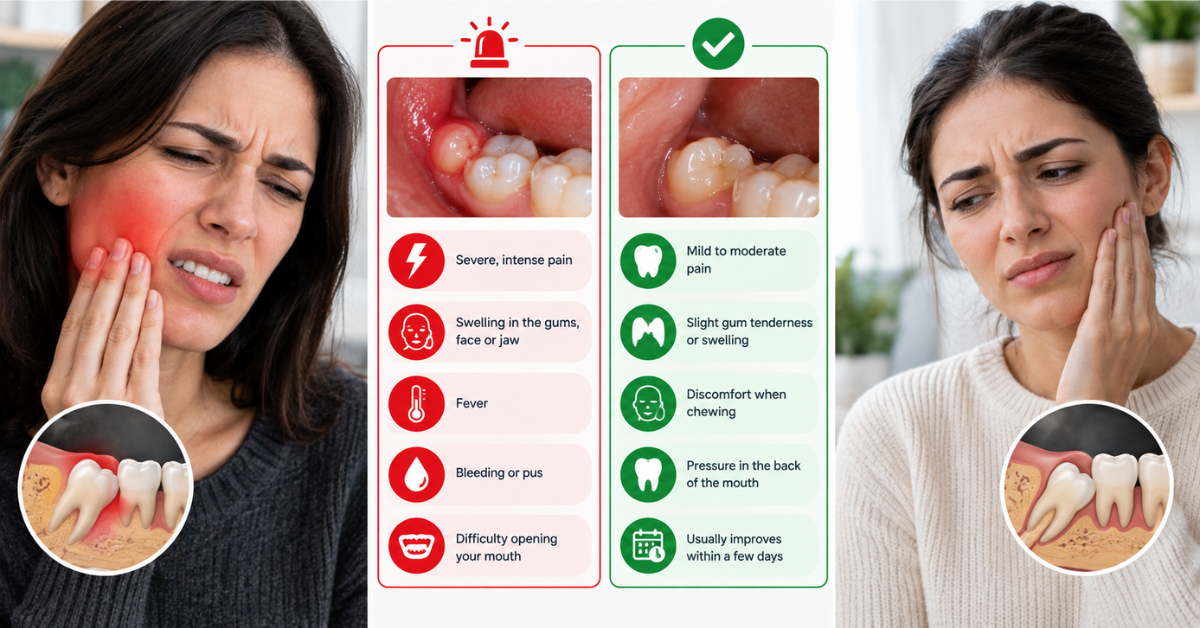
- Severe, throbbing pain that isn't controlled by over-the-counter medication
- Facial or gum swelling, especially if it's spreading
- Fever
- Difficulty swallowing or breathing
- A bad taste or odor from drainage
- Pain that suddenly stops after being severe (this can signal nerve death, not healing)
If you're experiencing difficulty breathing or swallowing along with facial swelling, this warrants emergency medical attention right away, not just a dental appointment; go to the nearest emergency room, and follow up with a dentist once you're stable.
The Bottom Line
A tooth abscess will not heal on its own, no matter how many days pass or how much the pain seems to ease. Every day it goes untreated is a day the infection has to spread further, and there's no way to predict in advance whether that process will take weeks or turn dangerous within 48 hours. The safest approach is always the same: get it evaluated as soon as symptoms appear, not after they've gotten worse.
Think you might have a tooth abscess? Find a 24/7 emergency dentist near you and get connected with same-day care before the infection has a chance to spread.
FAQs
Q: Can a tooth abscess go away without treatment?
A: No. An abscess is a bacterial infection, and your body cannot clear it on its own. Without treatment, it will continue to progress and can lead to serious complications over time.
Q: Is it normal for abscess pain to suddenly stop?
A: Not necessarily a good sign. Pain that suddenly disappears can mean the nerve inside the tooth has died, which doesn't mean the infection is gone. It's still important to be evaluated by a dentist.
Q: How urgent is a tooth abscess really?
A: It should be treated as urgent. While the timeline for complications varies, some infections become dangerous within just a few days, and there's no reliable way to know in advance how quickly yours might progress.
Q: What are the first treatment steps for a tooth abscess?
A: Treatment typically involves draining the abscess and addressing the source of infection, often through a root canal or, if the tooth is too damaged, extraction. Antibiotics may also be used to help control the infection alongside these procedures.
Q: When does a tooth abscess become a medical emergency?
A: If you experience difficulty breathing or swallowing, rapidly spreading facial swelling, or a high fever, seek emergency medical care immediately, in addition to following up with a dentist.