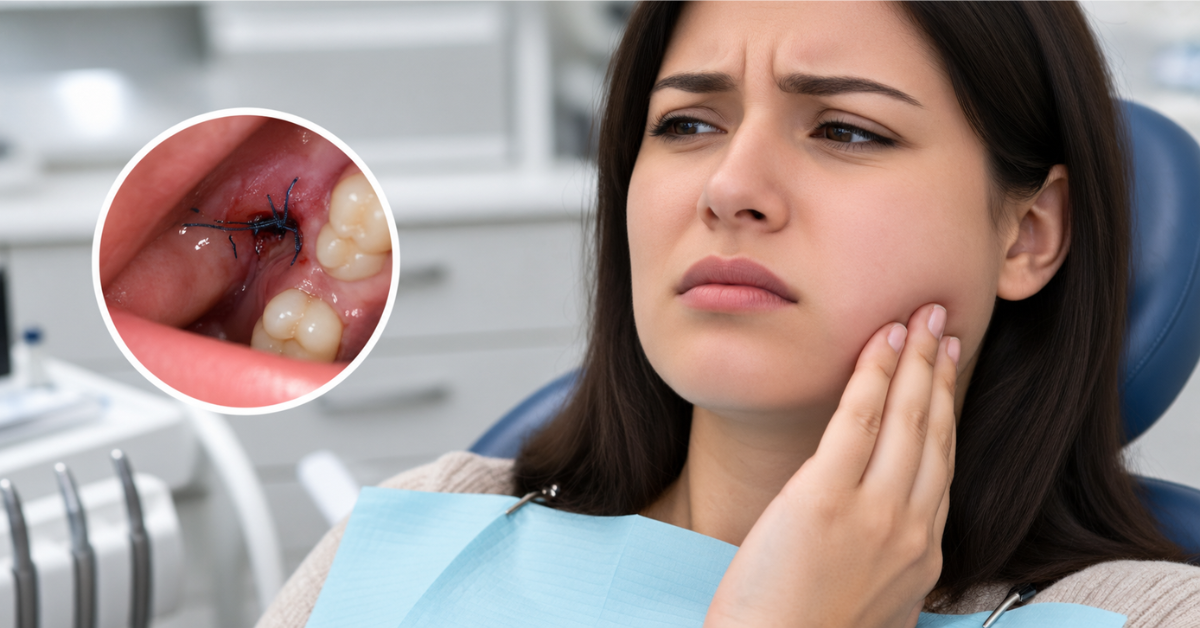
Sharp pain when you bite down, then... nothing. No swelling, no visible damage, and by the time you're in the dentist's chair the pain seems to have disappeared, almost like it was never there at all. You start to wonder if you imagined it, or if it was just a weird piece of food catching the wrong way. Then it happens again a few days later, on the same tooth, in the same spot, and this time you notice it only shows up with certain foods, or only when you bite down a specific way and let go. That maddening inconsistency is exactly what makes this problem so easy to dismiss and so hard to pin down on your own. This on-again, off-again pain is the hallmark of cracked tooth syndrome — one of the trickiest dental problems to diagnose because the crack is often too small to see or even show up on an X-ray, leaving both patients and sometimes dentists chasing a symptom that seems to disappear the moment anyone tries to actually look for it.
What Is Cracked Tooth Syndrome?
Cracked tooth syndrome refers to a fracture in a tooth that isn't yet a complete break — a hairline crack running through the enamel and sometimes into the deeper layers of the tooth. Unlike a chipped or obviously broken tooth, the crack can be nearly invisible, and the tooth may look completely normal to the naked eye.
The pain happens because chewing flexes the two sides of the crack apart, irritating the nerve inside. When you release the bite, the crack closes back up and the pain stops just as suddenly as it started.
Can a Chipped Tooth Wait Until Morning, or Is It an Emergency?
What Causes a Cracked Tooth
- Chewing on hard foods — ice, hard candy, nuts, popcorn kernels
- Grinding or clenching your teeth, especially at night
- A large, old filling that has weakened the remaining tooth structure
- A blow to the face or mouth
- Sudden temperature changes, like biting into something hot right after something cold
- Age-related wear — molars naturally accumulate stress fractures over decades of use
Back teeth (molars and premolars) are affected most often, since they take the brunt of chewing forces.
Signs Your Tooth May Be Cracked
Cracked tooth syndrome has a fairly recognizable pattern:
- Sharp pain when biting down, particularly when releasing the bite, rather than a constant ache
- Pain that comes and goes rather than staying steady
- Sensitivity to sweet foods or cold drinks that isn't present all the time
- Pain concentrated on chewing in one specific spot, especially with certain foods
- No visible damage when you look in the mirror — this is what makes it so easy to dismiss
Because there's often no obvious trigger and no visible crack, people frequently describe the pain as unpredictable, which can lead to it being brushed off for weeks or months.
When to Treat It as an Emergency
Most cracks don't require an ER visit, but you should see an emergency dentist as soon as possible — not wait for a routine cleaning — if you notice:
- Pain that is worsening or becoming constant rather than intermittent, which can mean the crack has reached the nerve
- Swelling in the gum or face, a sign the crack has allowed bacteria into the tooth
- A visible line, chip, or piece of tooth that's come loose
- A fever or bad taste alongside the tooth pain
- The pain is severe enough to interfere with eating or sleeping
Left untreated, a crack can progress deeper into the tooth, eventually reaching the nerve and root — at which point a simple fix can turn into a root canal, or in advanced cases, an extraction. Cracks generally don't heal or stay the same; they tend to worsen with continued chewing pressure.
How Dentists Diagnose It
Because cracks are often invisible on X-rays, dentists rely on a combination of methods:
- Bite tests using a small stick or tool to isolate which tooth and cusp reproduce the pain
- Dye staining to make a hairline crack visible
- Magnification or a dental microscope to inspect the tooth surface closely
- Cold and air testing to check how the nerve responds
Treatment Options
Treatment depends on how deep the crack runs:
- A crack limited to the enamel may just need a filling or bonding, and possibly a crown to protect the tooth from further stress
- A crack that has reached the nerve typically requires a root canal followed by a crown
- A crack that extends below the gumline or splits the root often means the tooth can't be saved and needs extraction
What to Do in the Meantime
- Avoid chewing on that side of your mouth
- Stick to softer foods until you're seen
- Avoid very hot or cold foods and drinks
- Don't ignore intermittent pain hoping it will resolve on its own — it's a sign of a structural problem, not something that heals with time
The Bottom Line
Cracked tooth syndrome is easy to overlook because it hides between bites and doesn't show up on X-rays. If you're getting sharp, short bursts of pain when chewing — especially in one specific tooth — it's worth having it checked before the crack progresses. The earlier a crack is caught, the more likely the tooth can be saved with a simple restoration instead of a root canal or extraction.