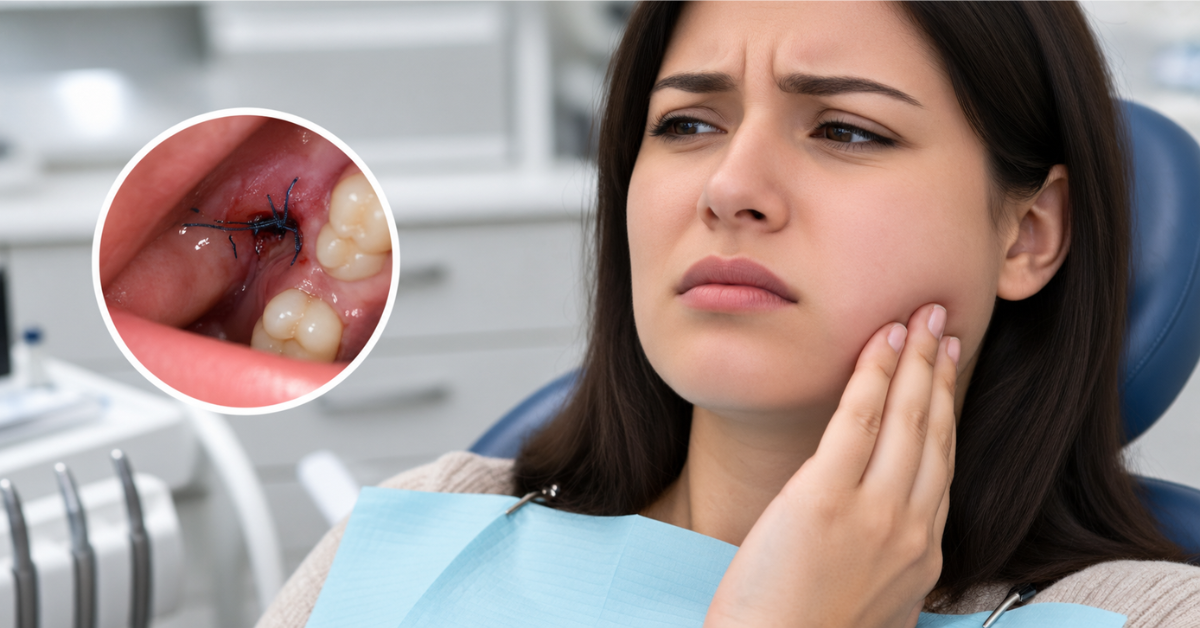
A throbbing tooth that's suddenly gotten worse, a swollen jaw, or a bad taste that won't go away — these are often the first signs of a dental abscess. It tends to announce itself gradually at first, a little sensitivity here, some tenderness when you bite down there, and then seemingly out of nowhere the pain becomes impossible to ignore. That jump from "manageable" to "I can't think about anything else" is exactly what throws people off, because it doesn't always match how serious the underlying problem actually is.
A dental abscess is one of the most painful — and potentially dangerous — problems in dentistry, not because it's rare or unusual, but because it's an active bacterial infection sitting in tissue that's extremely close to the rest of your head, neck, and bloodstream. Knowing what's actually happening inside your mouth, what caused it, and which symptoms separate "get to a dentist this week" from "this can't wait until morning" can make the difference between a straightforward fix and a much bigger problem.
How Long Can You Leave a Tooth Abscess Untreated?
What Is a Tooth Abscess?
A tooth abscess is a pocket of pus caused by a bacterial infection. It usually forms in one of two places:
- At the root tip (periapical abscess): Bacteria get inside the tooth through a deep cavity, crack, or old filling, kill the nerve, and then spread out through the root into the surrounding bone.
- In the gum beside the tooth (periodontal abscess): This starts in the gum tissue, often related to gum disease or something trapped below the gumline, rather than the tooth's nerve itself.
Either way, the infection creates pressure and inflammation, and the body's immune response is what causes most of the pain and swelling.
What Causes It
Most abscesses trace back to one of these:
- Untreated cavities that eventually reach the nerve
- Cracked or fractured teeth that let bacteria in
- Old dental work — a filling or crown with a gap or leak underneath
- Gum disease, which creates deep pockets where bacteria collect
- Trauma to a tooth, even from years earlier, that slowly kills the nerve without obvious symptoms at first
Symptoms to Watch For
Common signs include:
- A persistent, throbbing toothache that can radiate to the jaw, ear, or neck
- Sensitivity to hot and cold that lingers well after the trigger is gone
- Sensitivity to pressure when biting or chewing
- Swelling in the face, cheek, or jaw
- A bad taste in your mouth or bad breath that doesn't improve with brushing
- A small, pimple-like bump on the gum that may drain fluid
- Fever, fatigue, or swollen lymph nodes in the neck
Some abscesses are surprisingly quiet — dull, intermittent pain rather than constant agony — which is part of why people put off getting checked.
When It's a True Emergency
A tooth abscess is a bacterial infection, and infections don't stay put. Call an emergency dentist right away if you notice:
- Facial or jaw swelling that is spreading or getting bigger, especially if it extends toward the eye or down the neck
- Difficulty swallowing or breathing
- A fever, especially over 101°F
- Swelling that is pushing the eye shut or affecting your vision
- A rapid heartbeat, confusion, or feeling generally very unwell alongside dental pain
These symptoms can point to the infection spreading into deeper tissue spaces of the face or neck, or into the bloodstream — a situation that can become life-threatening within hours. If you have any of these signs, go to an emergency room or urgent dental clinic immediately rather than waiting for a regular appointment.
If your symptoms are limited to tooth pain, localized swelling, and sensitivity — uncomfortable but not spreading — you still need to be seen quickly, ideally the same day, but it's reasonable to call an emergency dentist first rather than go straight to the ER.
What Happens at the Dentist
An abscess doesn't heal on its own, and antibiotics alone won't fix it — they can calm an infection temporarily, but the source has to be treated. Depending on the tooth, your dentist will typically:
- Drain the abscess to relieve pressure and remove infected material
- Perform a root canal to remove the dead or infected nerve tissue and save the tooth, if it's restorable
- Extract the tooth if it's too damaged to save
- Prescribe antibiotics if the infection has started to spread beyond the tooth itself
The sooner it's treated, the more likely you are to keep the natural tooth and avoid complications.
What You Can Do While You Wait to Be Seen
- Rinse gently with warm salt water several times a day
- Take over-the-counter pain relievers as directed
- Avoid very hot, cold, or sugary foods and drinks
- Don't apply heat to the outside of your face — it can encourage swelling to spread
- Don't try to pop or drain a gum boil yourself
The Bottom Line
A tooth abscess is your body telling you there's an active infection that needs professional treatment — not something to wait out. If swelling is spreading, you have a fever, or you're having any trouble breathing or swallowing, treat it as a medical emergency. For everything else, get in front of an emergency dentist as soon as possible; the earlier it's treated, the simpler (and less painful) the fix usually is.